How to play fishing games once you see the ammo for what it is
Fishing games are the category most likely to be misread by players raised on European lobbies, because they look like arcade shooters and are actually rapid-fire wagering machines. The 1st.game drawer gives Fishing its own category, and inside it the format is consistent: fish of different sizes cross the screen, you fire at them, and every single shot deducts its cost from your balance whether it lands or not. Ammunition is the stake. Downing a fish credits its listed value, bosses and special targets carry multipliers or trigger bonus phases, and your cannon’s power setting scales both the cost per shot and the potential return. Skill exists here in a thin layer — target selection and not wasting shots — but the settlement engine underneath is the same house-edged mathematics as every other game in the building, dressed in cheerful graphics that make spending feel like playing. This walkthrough covers the controls, the target economy and the cannon settings, then gets specific about pacing, because continuous fire is continuous wagering at a rate few other formats reach.
Contents
Controls, targets and the cost of holding the trigger
Everything on a fishing screen reduces to one exchange: shots cost, hits pay. The four pieces below map that exchange — how firing works, how targets are priced, what the power setting changes, and the pacing rules that stop an arcade session from billing like a bad hour at a fast table.
Firing is wagering, continuously
Tap to fire single shots or hold for a stream; many titles add auto-fire and target-lock that keep shooting at a chosen fish without further taps. Every projectile costs its stated amount the moment it leaves the cannon, and misses refund nothing. Auto-fire deserves particular respect: it converts your balance into wagers at machine speed while your attention wanders, which is exactly its job.
Reading the target economy
Small fish fall easily and pay little; large fish, bosses and specials absorb many shots but credit large multiples when they go down. Whether a given shot sinks a given fish is decided by the game’s random engine, not purely by aim — a big target may swallow a long, expensive burst and swim off regardless. The value printed on a fish is what a kill pays, never a promise about the cost of earning it.
Cannon power scales both directions
The power or bet-level control raises the cost of each shot and the damage it deals, shifting you toward bigger targets faster — and draining a fixed balance proportionally quicker when the big targets don’t fall. There is no power level that improves the underlying return; the setting chooses your volatility, in precisely the way a slot’s stake selector does, behind a more entertaining dial.
Pacing rules that survive the graphics
Decide a session amount before launching, fire in deliberate bursts rather than holding the trigger, and prefer manual fire while learning a title — auto-fire is a convenience worth enabling only once you know a game’s drain rate. When the session amount is gone, the session is over; the boss that seems one burst from falling will still be swimming tomorrow, priced the same.
1. The live arena format, alongside fishing-style games
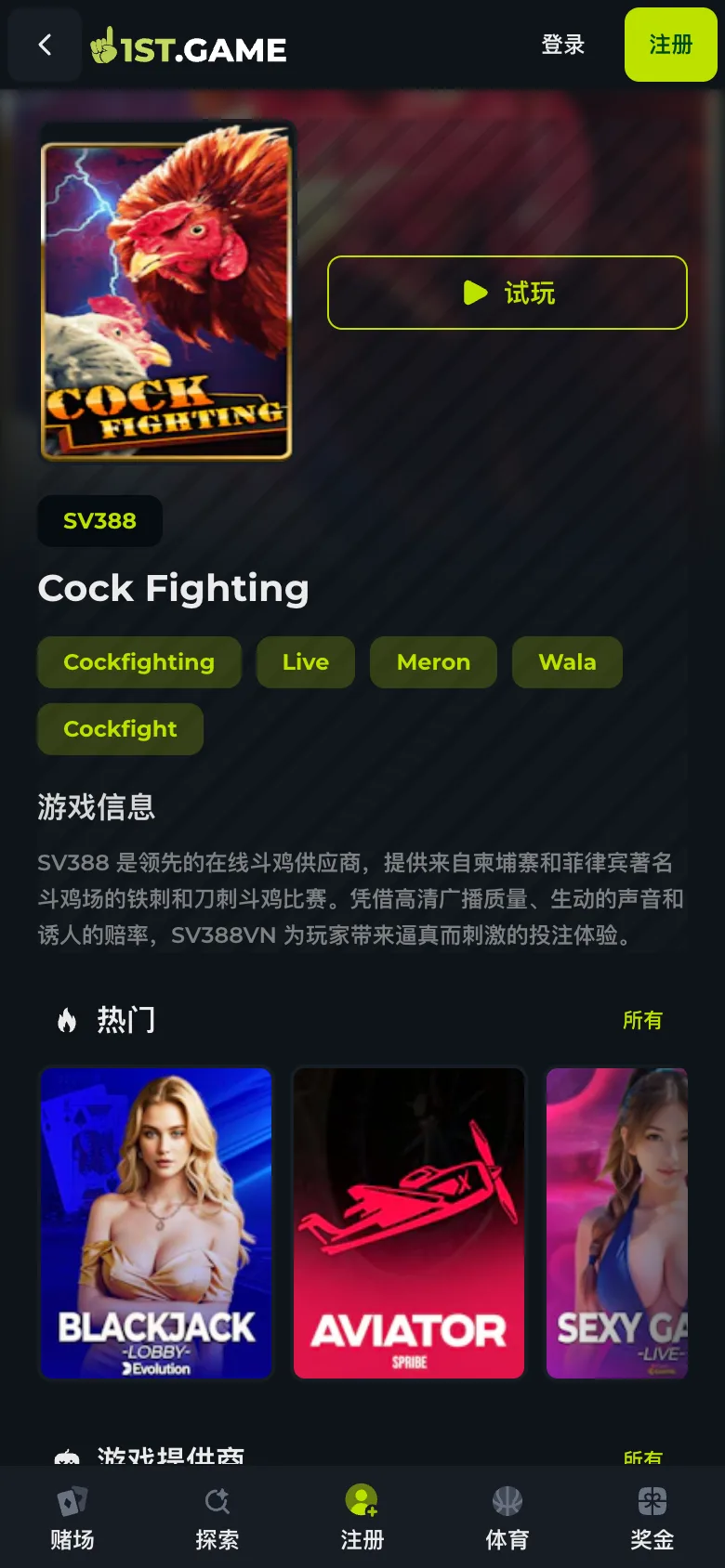
Not every real-money title on 1st.game is a machine. The Live tab also carries an SV388 cockfighting arena, which streams a real event you bet on rather than a game you play. It is worth knowing the difference: with arena and fishing-style titles your stake behaves differently from a slot spin, and we cover that distinction in the body above.
Frequently asked questions
Is there real skill in fishing games?
A thin, real layer: choosing targets sensibly, not spraying shots at fish about to leave the screen, and managing your cannon setting all reduce waste. But hit resolution runs through a random engine with a built-in house margin, so no marksmanship makes the format profitable over time. Treat the skill layer as a way to lose slower and enjoy longer, which is genuinely worth something.
Why did a boss take so many shots and still escape?
Because takedowns are probabilistic, not damage meters in the arcade sense. Each shot carries a chance — influenced by the game’s maths, not displayed on screen — of felling the target, and long unlucky bursts are normal behaviour, not malfunction. The sunk cost of shots already fired is the trap: the fish owes you nothing, and the next burst is priced independently of the last.
How do fishing sessions compare to slots for budget planning?
Plan them as faster. A held trigger fires many priced shots per second, so the effective wager rate can outrun a slot session at a similar stake level. The same tools apply — a fixed session amount, the account-level deposit limit set in advance, and honest accounting afterwards via the transaction history, which records what the pleasant graphics may not have felt like.
